Case analysis and intake for plaintiff firms
From intake to demand, every page cited.
Brennick runs a case from intake to demand: conflict checks, a timeline cited page by page, gaps flagged, strength and damages, the demand in your firm’s style, and a portal that keeps your client informed. A licensed attorney at your firm approves the analysis and the demand before they are used.
3-day trial, one full case. Card required.
The figures
Measured, not promised
Checked against case files where every date and event was known in advance, and graded by code, not by another AI. The definitions are under each figure; the method is on the accuracy page.
- 97% of citations point to the right page
- Each timeline entry cites a page. A citation counts only when the cited page itself contains the fact.
- 97% of medical events found
- Every visit, test and procedure in the test files was known in advance. This is the share the timeline found.
- 99% of visits cited to their own page
- On 606 visits in files held back from development. When a visit page could not be confirmed, the visit cites its course page instead.
01 · Read
Every page, scanned ones included.
PDFs, faxes, Word files, email and photos. A scanned page is read by OCR, then by the same steps as the rest.
02 · Cite
Every entry points at its page.
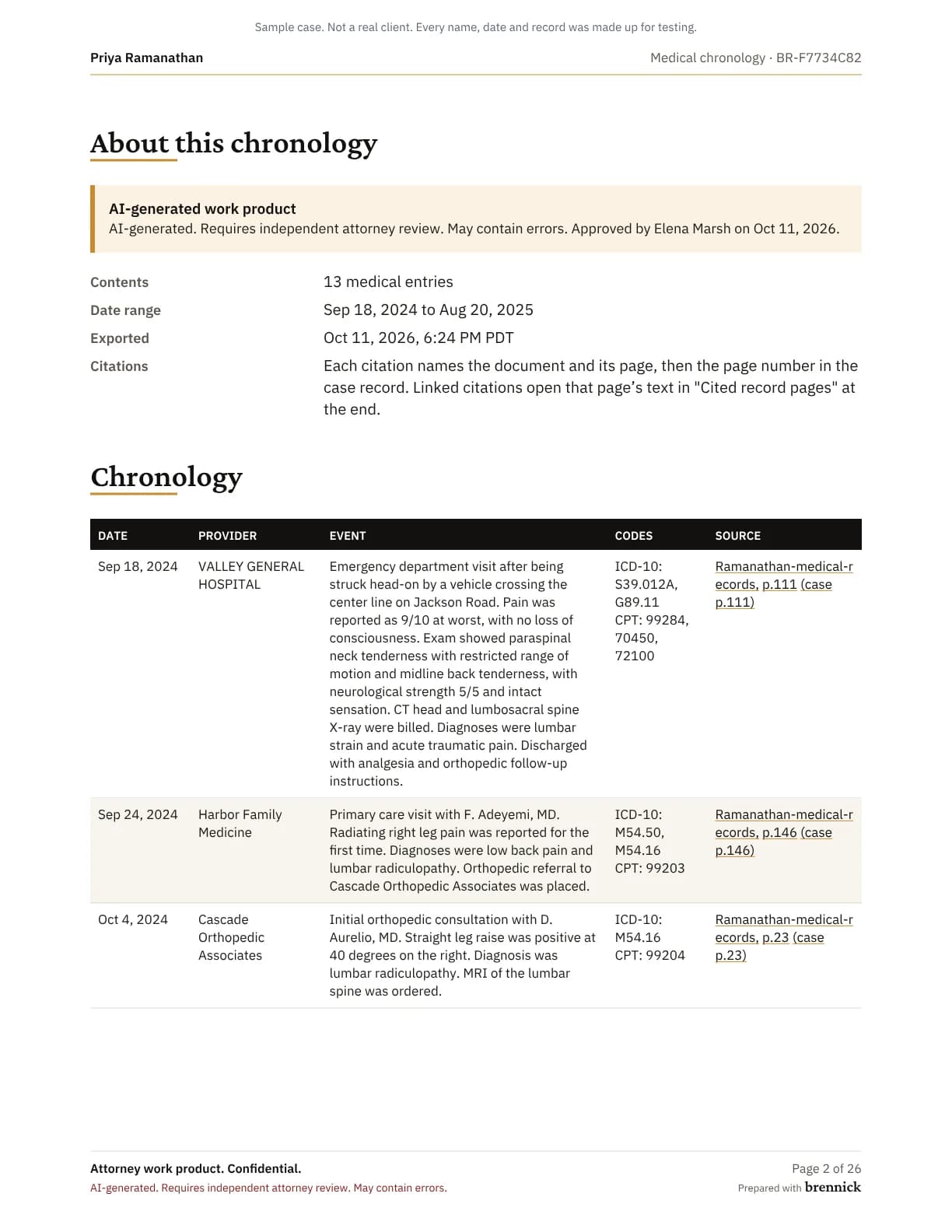
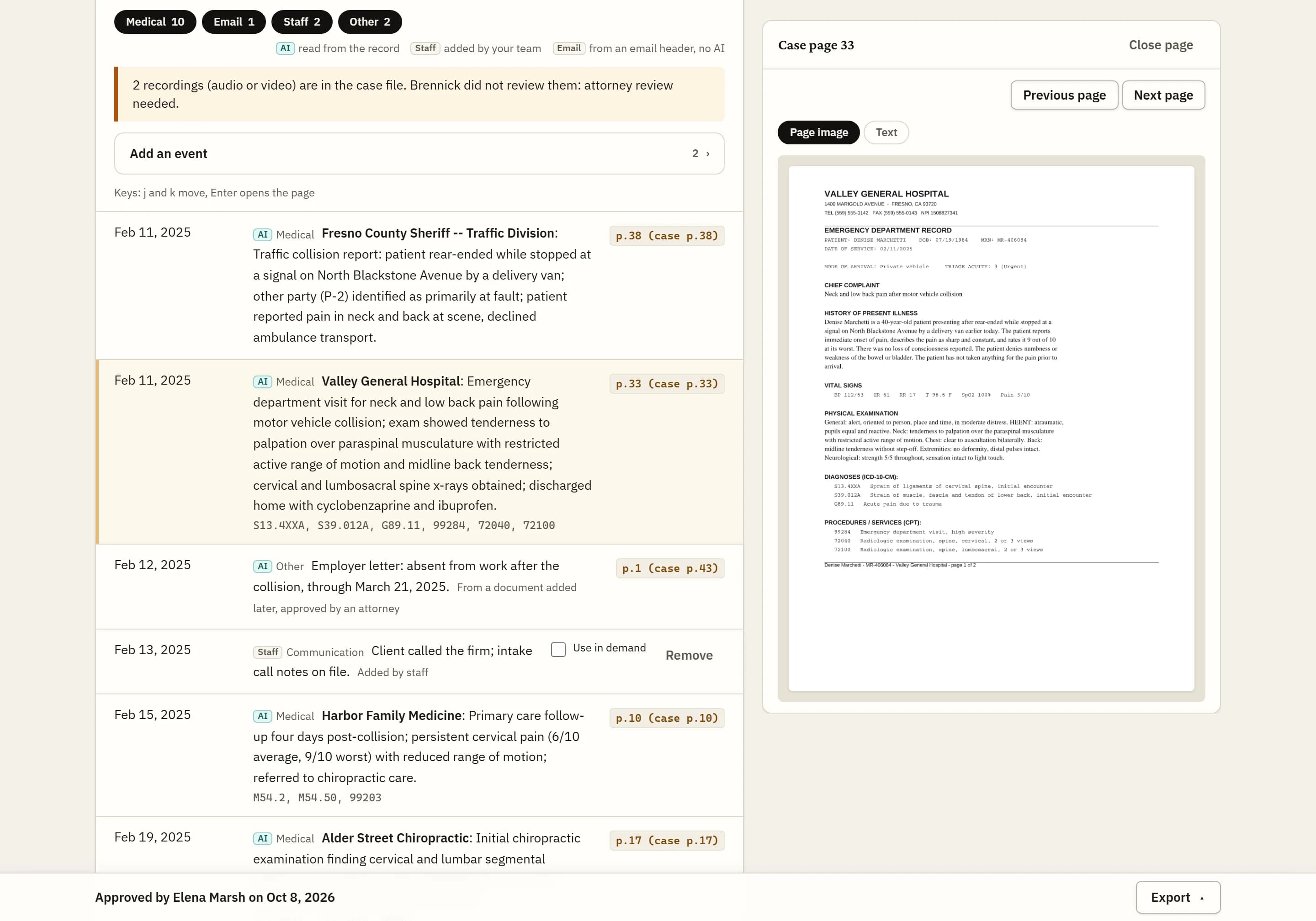
A citation counts only when the cited page itself contains the fact. Click it and the cited page opens beside the entry.
03 · Approve
Nothing leaves draft until an attorney signs off.
Only a licensed attorney at your firm can approve. Every AI draft and every review is in an audit log nobody can edit.
The analysis
Four things your attorney reviews
One analysis per case, in four parts. Each part cites the pages it rests on, and your attorney opens, edits and approves all four before anything is used. Then Ask this case answers questions from the records, and the Case Strategy Report builds on the approved work.
- 01
Case timeline
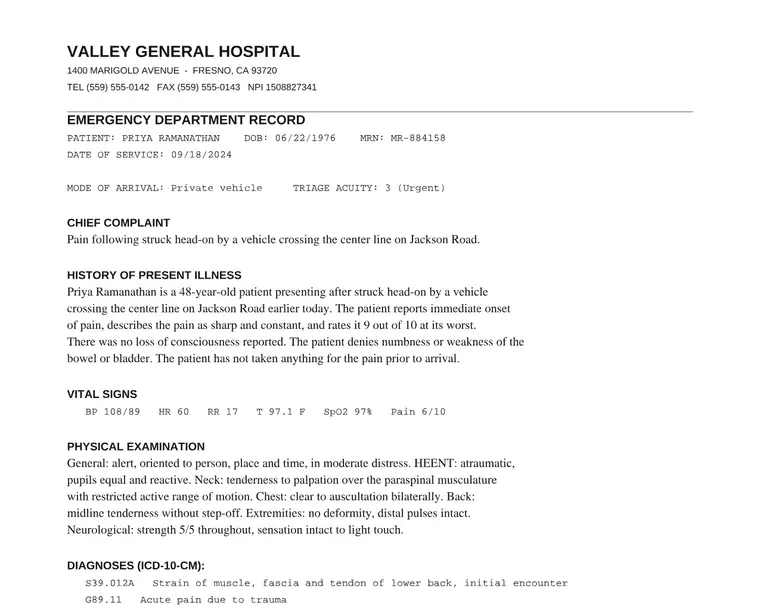
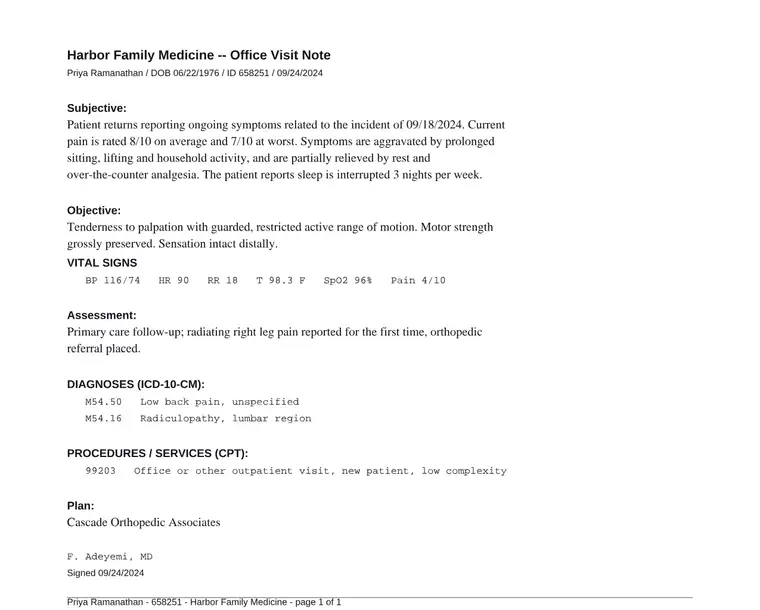
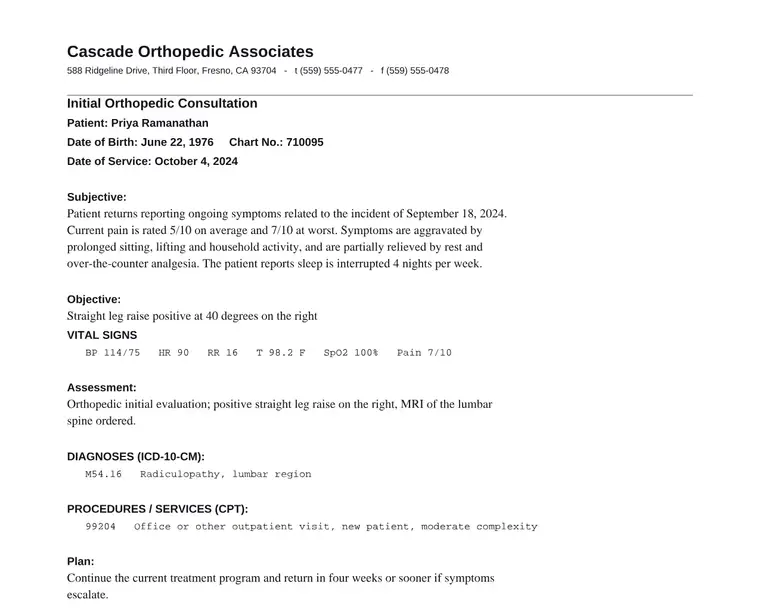
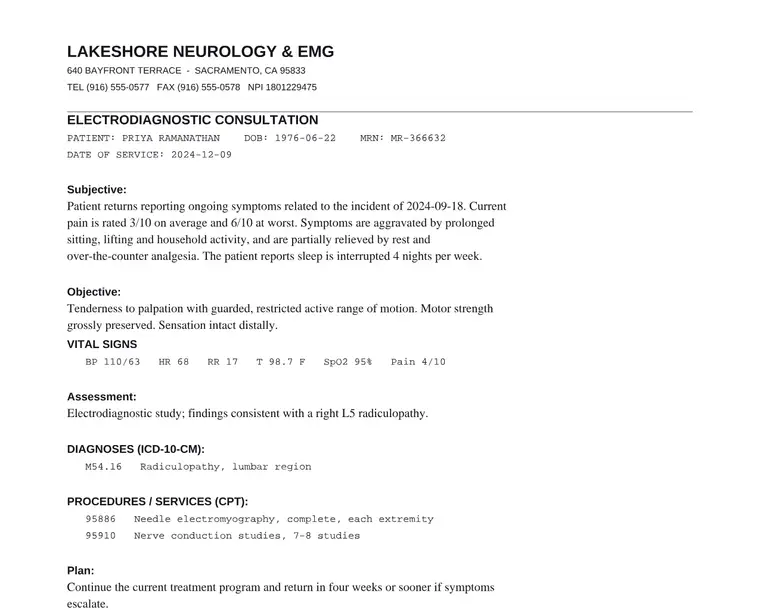
Medical visits, tests, procedures and non-medical events in one dated timeline, each entry cited to its page.
Case timelines - 02
Gaps and missing records
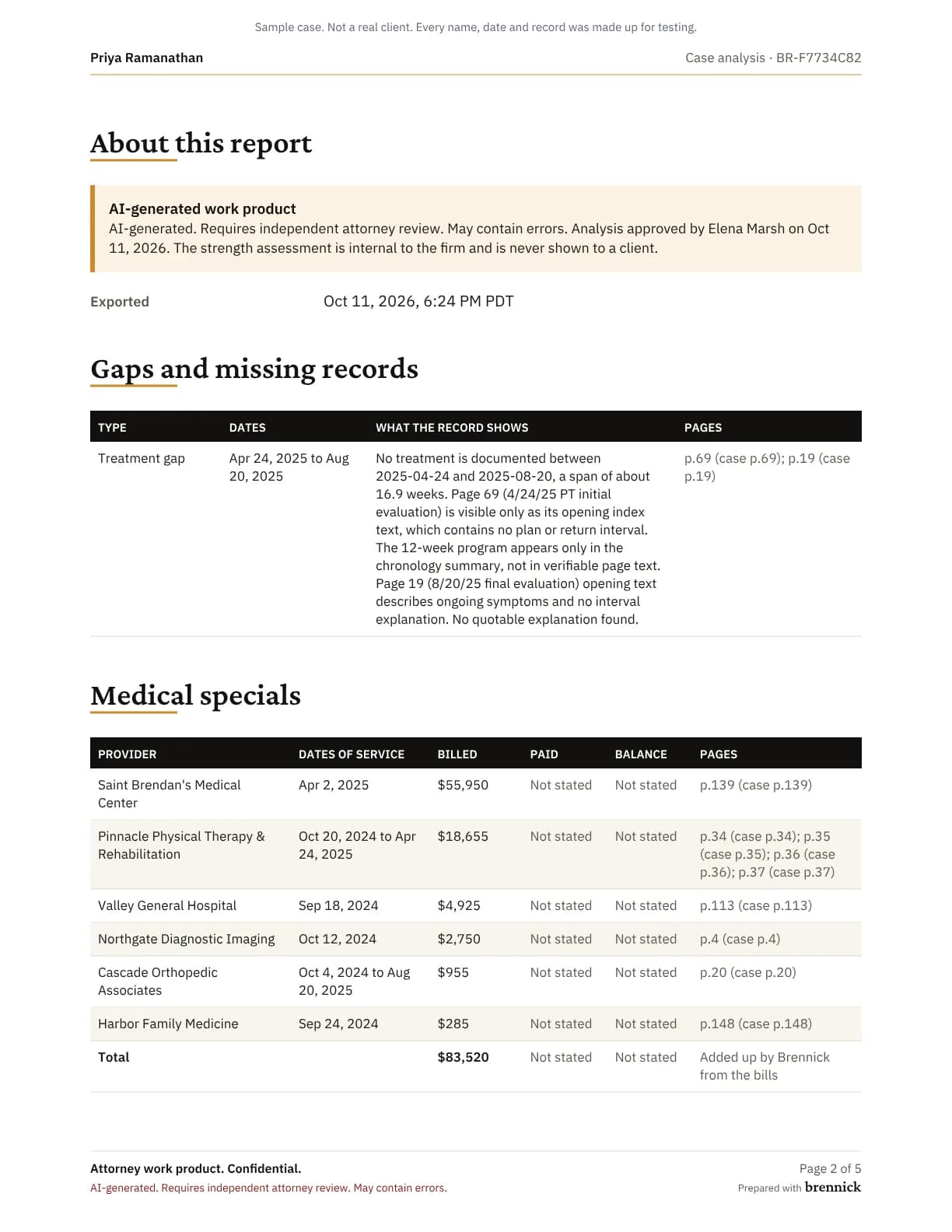
Treatment gaps of six weeks or more, ordered tests with no result and referrals with no record, each with the page that shows it.
How gaps are found - 03
Strength assessment
What supports the case and what cuts against it, each point cited. It describes the record; it never forecasts a result.
Strength assessment - 04
Damages range
A range built on stated state rules, labeled verified or AI-researched, with its own attorney review. Clients never see it.
Damages ranges
The demand
Then the demand, in your firm’s voice
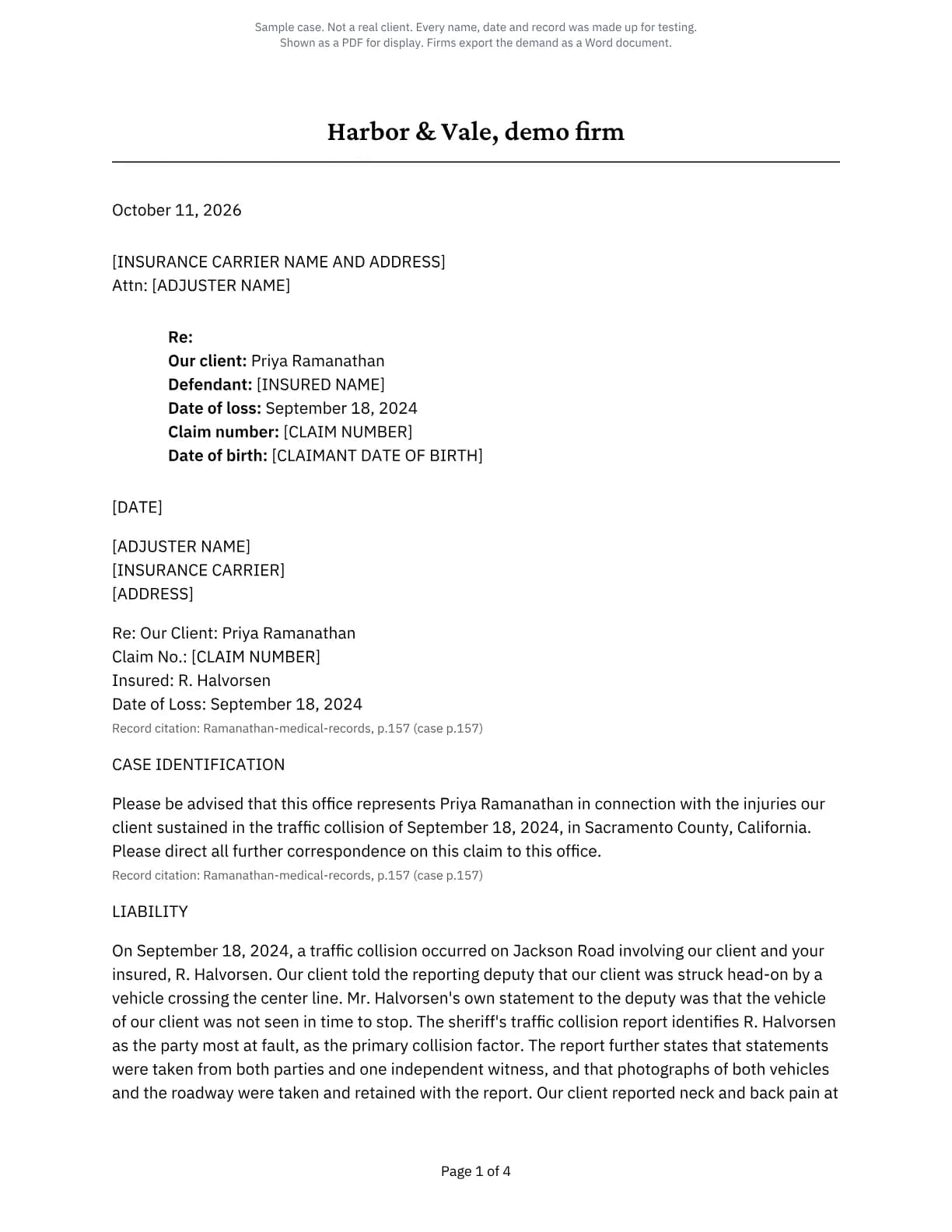
A first draft in your firm’s structure and tone, taken from the style of your own sample letters, never their text. The specials table is built from the bills, every amount cited to its page. Your attorney sets the amount and exports it.
Demand letters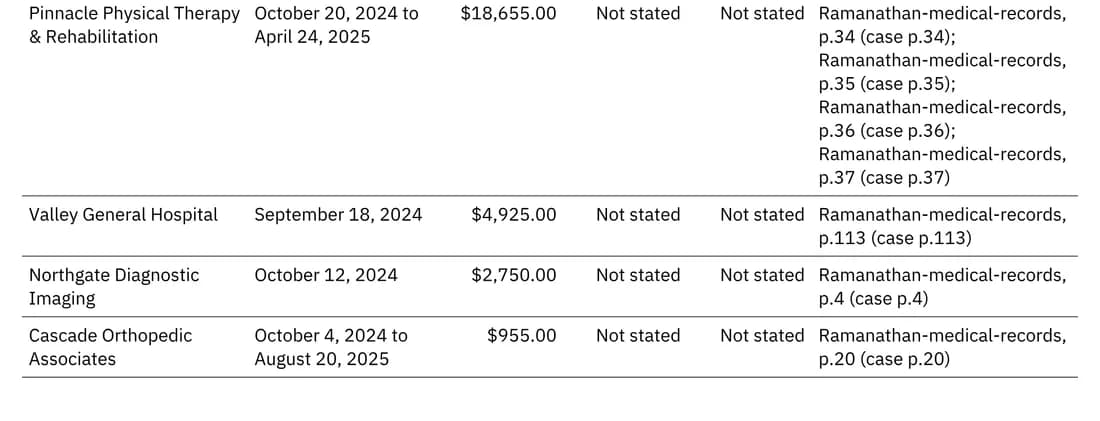
How it works
How a case moves
- 01Case comes inintake or upload
- 02AI draftcited to pages
- 03Attorney reviewedit, approve or reject
- 04Approvedexport, demand, report
- 05Clientnever sees AI output
- 01
The case comes in
A client fills in your intake page, or your staff open a case and add the file. PDFs, scans, Word, email, spreadsheets and photos all work.
- 02
Conflicts checked, then you decide
Every party is checked against your other cases. A possible match waits for a person to clear it. A licensed attorney accepts or declines, and nothing is analyzed until your firm chooses to.
- 03
Brennick reads every page
Each timeline entry cites its page, treatment gaps and missing records are flagged, and the bills become a charges ledger with every amount cited.
- 04
Your attorney reviews and approves
The attorney opens the timeline, the gaps, the strength assessment and the damages range, edits what needs editing, and approves. Nothing is used before that.
- 05
The demand is drafted
A first draft in your firm’s structure and tone, with a specials table built from the bills and every amount cited to its page. Your attorney sets the amount and exports it.
- 06
The case keeps moving
Your client sees the case status and uploads documents in the client portal, never AI output. On the plans that include them, records requests are tracked to their follow-ups and deadlines go on your calendar.
Who it is for
Built for plaintiff practices
Personal injury and employment, at firms of any size.
Personal injury
Medical records, bills and claim forms, police reports and insurer letters become one cited timeline, a charges ledger and a demand draft.
Personal injuryEmployment
HR records, emails, message exports, pay records and agency filings become one dated line of who said what, and when, cited to the page.
Employment
Pricing
Flat pricing, every plan on one page
One flat price per firm, set by how many attorneys you have. Each plan includes new cases every month; extra cases are $10. Paralegals and staff are free on every plan.
Solo
$299a month
or $3,229 a year, 10% off
- 1 attorney
- 50 new cases a month included
- Cited timelines, gaps, strength and damages
- Demand drafts in your firm’s style
- Ask this case and the Case Strategy Report
- Intake page, conflict checks, client portal
- Charges ledger and every common file type
- SOL tracking (calculated in California)
- For two to five attorneys
Brief
$499a month
or $5,389 a year, 10% off
- Up to 5 attorneys
- 100 new cases a month included
- Everything in Solo
- E-signature
- Clio, Google Calendar and Outlook
Docket
$799a month
or $8,629 a year, 10% off
- Up to 10 attorneys
- 150 new cases a month included
- Everything in Brief
- Records requests and follow-ups
- Lien tracking and case costs
- Firm reporting
Enterprise
Custom
- A custom plan and terms
- Everything in Docket, with the included cases and terms set for your firm.
- Everything in Docket
- Custom case volume
- Custom terms
3-day trial, 1 case, card required. Firms that need custom terms or case volume get an Enterprise quote.
See for yourself
Check it yourself
Read what Brennick produces before you take anyone’s word for it: four documents from a sample case, and how every accuracy figure is measured.
Chronology
The medical chronology an attorney approved, as your firm would export it.
Read the sample: ChronologyDemand letter
A demand letter draft in the firm’s style, shown as a PDF. Your firm exports it as a Word document to edit.
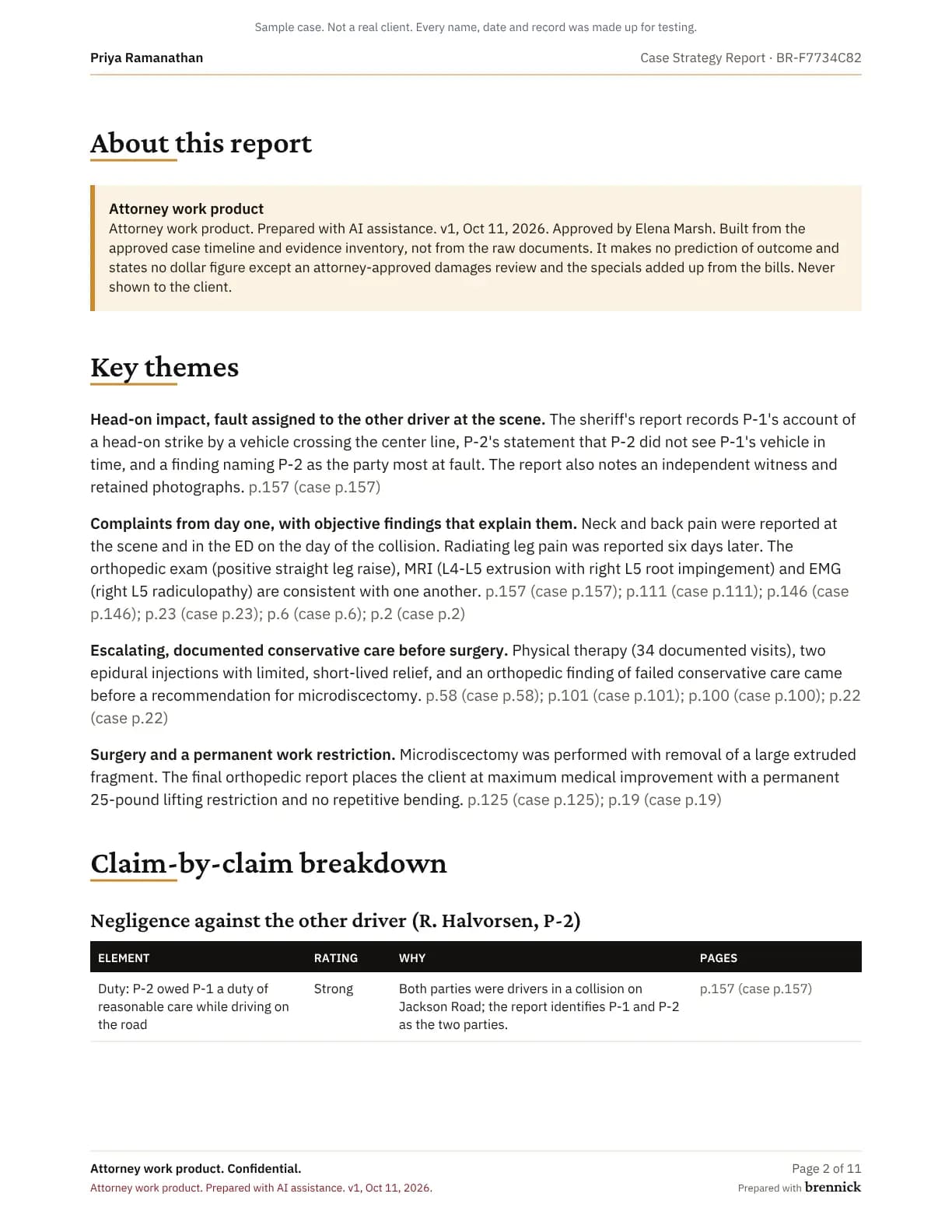
Read the sample: Demand letterCase Strategy Report
An approved strategy report built from the approved timeline and the evidence list, never from the raw documents.
Read the sample: Case Strategy ReportAnalysis report
The approved analysis: gaps and missing records, the strength assessment and the damages review with its legal basis.
Read the sample: Analysis report
3-day trial, 1 case, card required.
Security
Built for supervision
An attorney approves
Only a licensed attorney at your firm can approve an analysis, a damages range or a demand. Until then it is a draft.
Every step is logged
Every AI draft and every human review goes into an audit log nobody can edit, so your firm can show who checked what and when.
Your files train nothing
Brennick does not train models on your data, and its AI provider is barred by contract from doing so.
Read your next file with Brennick
Three days, one full case, card required and not charged until day four. Bring a case you know well and check every citation against the record.